
There’s courage aplenty on the summer’s movie screens: Hey, there’s Ethan Hunt hopping on the side of a plane! Owen’s battling dinosaurs! Oooh, Scott Lang’s bravely shrinking for the sake of all humanity! Heroes are everywhere—risking their all for everything. And that’s great. Worthy, even.
But truth is, sometimes it’s easier to die for something than to live for it.
In Ricki and the Flash, the titular character (played by Meryl Streep) is an aging rocker, lost somewhere between a has-been
and never-was. She deserted her husband and kids to become a rock star. And even as she floundered, Ricki never looked back. She still plays music with her band, The Flash, in a small Tarzana, Calif., dive—checking groceries to pay the bills.
and never-was. She deserted her husband and kids to become a rock star. And even as she floundered, Ricki never looked back. She still plays music with her band, The Flash, in a small Tarzana, Calif., dive—checking groceries to pay the bills.
But when her daughter, Julie (Streep’s real-life daughter Mamie Gummer) tries to commit suicide, Ricki’s ex-husband, Pete (Kevin Kline) calls her home to Indianapolis. Once there, Ricki’s faced with a mountain of coulda-beens and shoulda-dones, confronting three children she hardly knows and who can barely stand the sight of her. “Guess you gotta give up a lot of special things to be a rock star,” Julie tells her.
Much of the movie is pretty discomforting—a litany of awkward dinners and embarrassing reunions, forced smiles and angry recriminations. And Ricki deserves everything she gets. She abandoned her family 20 years ago, and we can’t expect her kids to welcome her back as if nothing had happened. It’s not realistic. It’s not even fair. Not to her kids, anyway. Their mother made a really selfish, really bad decision that kinda crushed them. They have every right to be angry.
But here’s the thing: Ricki knows that. She didn’t come back for a joyous reunion. It’s not like she’s trying to kiss a 20-year-old boo-boo, making everything all better. She’s coming to help in the here and now—however her limited capital will allow her. She never really apologizes, but she accepts what she’s done. And she grieves.
When she confronts Julie’s ex—the catalyst to Julie’s attempted suicide—he lobs an emotional grenade. “Julie hates you,” he says.
“That may be,” Ricki says. “And I have to live with that every day of my life. But nowyou have to live with the pain you caused.”
Mistakes can be forgiven. Wounds heal. But the harm we do never just vanishes. We don’t get reset buttons.
We Christians talk a lot about forgiveness and redemption and all. It’s at the core of the faith, and one of the elements that makes it unique amongst all the world’s other great religions. But for those of us who have forgiven, and for those of us who’ve desperately needed forgiveness, the path to redemption and reconciliation isn’t always easy. Our religion doesn’t erase all the hurt, all the damage. Forgiveness isn’t just a matter of saying so. It’s a process—a long, hard slog for all involved, and with no pat promise of a happy ending. And there are times when Ricki wants to just … stop. To erase that chapter of her life completely. And she begins to wonder whether she’s worth loving at all. Take a look at this clip:
“It’s not their job to love you,” Ricki’s boyfriend Greg (Rick Springfield) says in the clip. “It’s your job to love them.”
It’s a great line. There are no exceptions to that, no conditions. “Hope bears all things, believe all things, hopes all things, endures all things,” Paul said. We love in the midst of pain, angst, discomfort. We love even when we want to run away.
It’s easy to tell someone we love that we’d die for them. It sounds very noble, very heroic, very Ethan Huntish. But as a friend of mine told me once, how many people get a chance to really make good on that promise? Not many. For most of us, the real trick is to live and love when we’re not loved back. Live and love in a painful situation. To face up to the consequences when we’ve done wrong. To walk on.
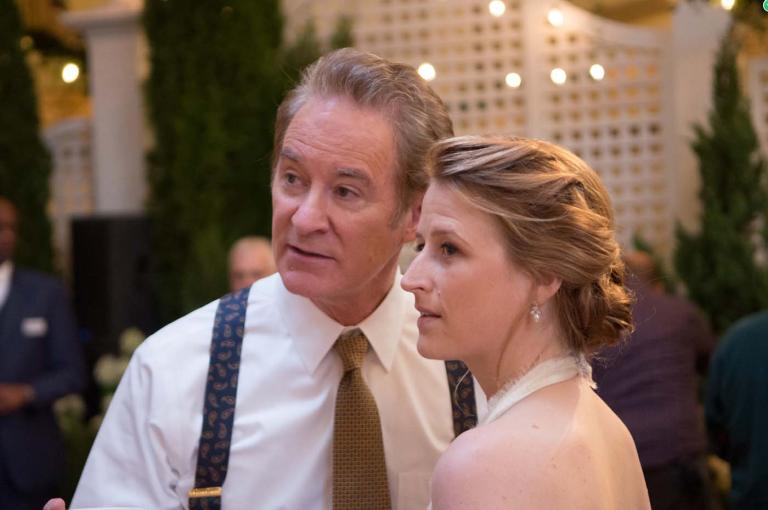 That’s what Ricki tells Julie at Julie’s brother’s wedding. “Walk on,” she says, when it looks like Julie—overwhelmed, we assume, by memories of her own ruined marriage—is ready to bolt. And the thing that’s great about that moment? Ricki’s in a situation that she’d like to bolt from, too. She’s sitting in the back of her own son’s wedding, shunned and even laughed at by some of the guests. She feels totally unwanted, totally out of place. And yet, she’s there. She’s walking on—pushing through the shame and judgement and heartbreak of so many bad decisions. In that moment, she’s living in a nightmare built especially by her, for her. And she endures it all for the sake of her son.
People will say, and perhaps rightly, that Ricki and the Flash is overly sentimental, maybe manipulative. But for me the movie works, and this moment works beautifully. It’s a reminder of what love will, and should, endure. It shows us what real redemption—in the midst of real pain—looks like. And it depicts the sort of courage we rarely see in the movies—a courage that we might just have to find ourselves.


