Showing posts with label Superman. Show all posts

Sunday, March 13, 2016

The Problem with R-Rated Superheroes

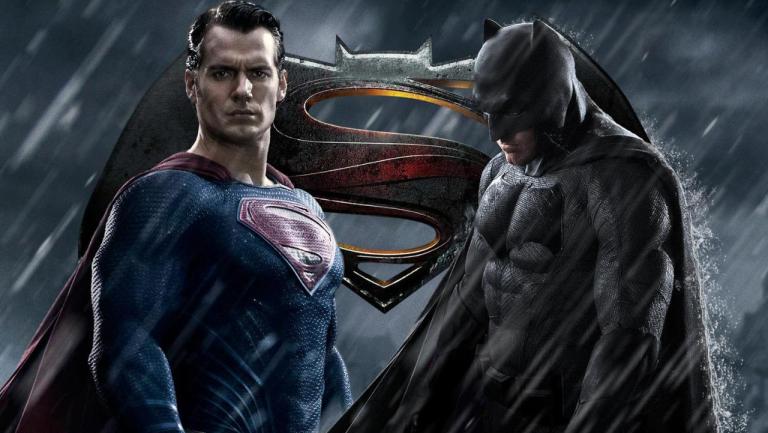
batmanvsuperman-xlarge
Artwork from Batman v Superman: Dawn of Justice, courtesy Warner Brothers
Batman v. Superman: Dawn of Justice will be rolling out to theaters later this month. But before the movie even lands in the local cineplex, there’s already buzz about what’ll be on the home video release: A big letter R.
According to ew.com, the “Ultimate Edition” of the movie will bear an R rating when it rolls out on DVD and Blu-Ray. Wolverine 3, due about this time next year, will also be shooting for an R. Many speculate that this could just be the beginning of a new wave of R-rated superhero stories. So prevalent is this sudden push for restricted ratings that Ant-Man director Peyton Reed suggested cheekily that this could be only the beginning. “Breaking: ANT-MAN AND THE WASP is going FULL NC-17,” he tweeted.
Some superhero fans, primed by the runaway success of the R-rated Deadpool, are excited to see superheroes go in a harsher, grittier, bloodier direction.
Don’t count me among them.
Don’t misunderstand me. I’m all for a bit of grit in my superhero stories. I wrote a book on the spirituality of Batman, based largely on Christopher Nolan’s darkly terrific Dark Knight trilogy. I’m eagerly awaiting the premiere of Daredevil’s second season on Netflix—a show that walks the line between PG-13 and R. Even Captain America—as straight-laced a superhero as there is—seems to have gotten deeper as his movies have gotten darker.
But when moviemakers push these superheroes into ever more depressing landscapes, I think we risk losing what made them so super to begin with.
Every culture has its myths and legends, be they religious or secular, featuring brave and powerful heroes and heroines who fight for what that culture holds dear. Often these stories had a hint of history in them, but whether they were historical or not was really, in a sense, beside the point. These stories linked generations together and helped give shape to society. And as such, they were often designed to teach younger listeners something about the world and how they should behave within it.
Granted, the characters in these stories were often far from perfect—indeed, they often behaved quite imperfectly—there’s still an aspirational flavor to them. The Greeks had their Iliad and Odyssey and their pantheon of heroes. The English had King Arthur and his knights. And for more than 80 years now, America has had its superheroes.
Like many of their mythic predecessors, our superheroes are often demigods, graced with powers and skills unattainable to folks like us. And they, like Achilles and Lancelot, have their share of flaws.
And from the moment of their inception, they were made for kids. Back in the 1930s and ‘40s, comics weren’t the province of fortysomething guys wanting to add to their collection. Children bought them, saving their nickels to take home Superman’s latest adventures, or reading about the Fantastic Four in the corner drugstore.
Sure, I understand that comics don’t fit that mold anymore. According to a survey by DC (the folks behind Superman and Batman), 64 percent of comic-book buyers are between the ages of 35 and 64. Deadpool, who first appeared in 1991, was never a kiddie comic-book character. And as I’ve mentioned, there’s an upside with even traditional superheroes growing grittier and more complex.
But you don’t adult content to tell a mature story. You can add grit without adding dirt, and excellence does not require f-words.
And while comic books might be the providence of adults these days, the superheroes themselves—the Supermans, Batmans, even, I’d wager, the Wolverines—are still very much embraced by children.
Take a spin through the big box store, and you’ll find legions of superheroes stocking the shelves where kids tend to gather. X-Men action figures. Iron Man birthday streamers. Captain America lunchboxes. LEGO became the biggest toy company in the world, in part, by peddling superhero sets to legions of children and tweens.
Even now, when we talk about the influence of superheroes on the culture, we understand the innate moral authority that these (admittedly flawed) characters bring to the table. They teach us lessons (“With great power comes great responsibility,” Spider-Man tells us). They serve as symbols (For years, superhero fans thought it was a crime that Wonder Woman had been so spurned by Hollywood: Girls, they said, needed to see a female superhero on screen.) At their best, they serve as role models. Even Batman, the poster boy for flawed superherodom, suggests that there’s light and hope that can be found even in a dark, dark world. That’s a message that all of us could stand to hear.
Heroes, even in today’s culture, mean something—especially to children. And it seems that, when we make their worlds too dark or make the heroes too adult, We lose their ability to reach the audience that arguably needs them the most. And we’re not doing just a disservice to kids. We’re doing a disservice to the superheroes themselves.

Wednesday, July 3, 2013

The Stranger Ranger


Yesterday during a run, I spent some time listening to an excellent StoryMen podcast (from the collective brain trust of Matt Mikalatos, J.R. Forasteros and Clay Morgan) featuring Eisner Award-winning comic book writer Mark Waid. He had some fascinating things to say about all sorts of stuff, but I was particularly interested in what he had to say about Man of Steel—especially the movie's controversial finale. While he was quick to say that he liked much of the movie (as I did), he said the fact that Superman killed Zod "broke my heart."

And then he said this:

Cynicism is very easy to write. Cynicism's the easiest thing to write. And if you hammer me for two hours about how this character is a symbol of hope, and he will lift us to the sun, and he will inspire us to greatness and he will show us the light … there’s no payoff for that, because in the end, he makes a very cynical decision and we’ve lowered Superman to our level, and that is not what Superman is created for. We don’t need Superman to be more like us. We are supposed to be more like Superman.

I was thinking about that in the context of another, far more cynical movie: The Lone Ranger, in theaters as of Wednesday.

I watched Lone Ranger television reruns when I was maybe 7 or 8. And I know there were a few afternoons I slapped on a dimestore domino mask, rode a stick horse around the living room and hollered, “Hi Ho, Silver!” In a time when Westerns were no longer en vogue, the Lone Ranger still had some pull with a tyke like me.

I think I liked him for much the same reason that I liked a lot of folks back then. He was an incorruptible good guy. You knew the Lone Ranger was never going to suffer a crisis of confidence. Tonto was never going to leave the Lone Ranger’s side. Silver was always going to come at a whistle. When you’re a kid, having people you can believe in, that’s a big deal. Kids need those sorts of heroes. Maybe we all do.

I think from the beginning, that’s been a huge part of the Lone Ranger’s appeal. He was a true-blue, practically square hero. He even had a code of honor—a factoid I didn’t know about until I wrote my Lone Ranger movie review for PluggedIn. It goes like this:

I believe...
that to have a friend, a man must be one.
that all men are created equal and that everyone has within himself the power to make this a better world.
that God put the firewood there, but that every man must gather and light it himself.
in being prepared physically, mentally, and morally to fight when necessary for that which is right.
that a man should make the most of what equipment he has.
that 'this government of the people, by the people, and for the people' shall live always.
that men should live by the rule of what is best for the greatest number.
that sooner or later...somewhere...somehow...we must settle with the world and make payment for what we have taken.
that all things change but truth, and that truth alone, lives on forever.
in my Creator, my country, my fellow man.

The Lone movie seems to forget all that. Here, John Reid (the real name of Mr. Ranger) is indeed a law-abiding do-gooder. And yet, his sense of morality—that the rule of law triumphs over a fast gun, that human life is precious—is treated as an antiquated naivety that should be dropped in light of the harsh Western sun. Tonto’s all about working outside the law and killing when need be. And slowly (unless things find a better equilibrium in what would look to be a very doubtful sequel), the Lone Ranger begins to see things Tonto’s way.

It would seem the makers of The Lone Ranger would have us believe that the heroism of our fathers’ and grandfathers’ day is just too unrealistic now. Too unbelievable. The world is too bad to support that sort of goodness.

"You can't make a movie now with the sort of story, characters and action that a 1950s TV show had," Armie Hammer (who plays the Lone Ranger) told movie critic Roger Moore. We are, he says, "too hip for the guy the way he was. Audiences are more discerning today — more sophisticated in terms of what they expect from a Western, a story like this. We had to give these two men a fresh twist, and I hope we pull it off."

But by assuming that we’ve outgrown the sort of aspirational heroes that the Lone Ranger stood for in the first place, I believe the movie stripped out his very soul. You can’t have the Lone Ranger without his Dudly Do-Right rectitude. If you take that away from him, you just have a man in a mask. And we’ve already got plenty of those.

Perhaps this isn’t so much an indictment of The Lone Ranger as it is on us. Or me. Maybe Hammer has a point. I find my adult self drawn to the darker heroes: the Batmans and Jack Bauers of the world. I’m sure if I watched an episode of the Lone Ranger now, I’d roll my eyes from the cheese and saccharine sincerity.

But shouldn’t we find a place for real, honest-to-goodness heroes somewhere? People who, in Waid’s words, don’t come down to our level, but force us to reach up to theirs? Isn’t that, in a way, what our society is based on? Our desire to be better tomorrow than we are today?

For me, the newest Lone Ranger movie succeeds only in patches—when it sheds its cynicism, drops its oh-so-modern sensibilities and returns to its roots, becomes what the Lone Ranger always has been and always was meant to be. When it wipes the smirk off its face, mounts his horse and rides into the fray, the William Tell Overture playing in the background, that’s when the movie soars. 

Tuesday, June 18, 2013

Man of Steel: Did It End Well?


Man of Steel did just (ahem) super at the box office this weekend, cashing $116.6 million over the weekend and, including some special Thursday screenings, $128.7 million overall. That's great—mostly. It's great for Warner Brothers, which now has an honest-to-goodness franchise in play again the year after The Dark Knight series concluded last year. It's great for Henry Cavill, who plays Superman and will have a chance to flash his chin cleft for years to come. It's great for pop-culture-centric Christian writers like me, who'll have more opportunity to write about the themes in play.

But I am bothered by the ending. Not horrified, necessarily, but bothered.

WARNING: The rest of this post will get very spoilery.

To recap (and I really hope you took that warning right above this sentence seriously), Superman and his nemesis General Zod have it out on Planet Earth—right in the heart of Metropolis. Much of the city is destroyed during their melee. And in the end, a furious and still defiant Zod turns his newly discovered heat-ray peepers to an innocent family, obviously intending to fry them. Superman does his best to stop Zod, but Zod's just as strong as he is and Superman knows that Zod will never stop and— and—

Well, Superman kills the guy.

Repeat: Superman kills.

Now, if we get all theological and say that Superman is a straight-up Christ figure and Zod is the devil or the epitome of evil or something, we can navigate this. As much as Jesus wants us to be good to one another, He doesn't have a problem crushing evil. And Zod certainly feels about as evil as it gets (in his own strangely principled way).

And sure, he seems broken up about it at the end. The movie suggests Superman didn't have a choice: It was either Zod or the innocent family. Given that either-or scenario, you gotta go with Zod.

But Superman doesn't kill people. He just doesn’t. That's not part of his character. And that bothers me. In fact, he didn’t just kill Zod. He fought the guy in the heart of Metropolis, destroying half the city it seemed. The Superman I grew up with, I think, would’ve led Zod out of town—never mind director Zac Snyder’s need for crashing buildings and explosions.

One of the things that I respected so much about Christopher Nolan's Dark Knight trilogy was how true he stayed to Batman's long-held mythos. Yes, they were dark stories. But he never fired a gun. He never killed anyone. Yes, he was a flawed, complex character. But he held firm to the central tenants of his own internal morality.

Superman is a better person (albeit alien person) than Batman. Everyone says so—even Batman. He's an optimistic, glass-half-full kind of guy compared to Batman's dour skeptic. While Batman slinks in the shadows, Superman's a hero of light. The movie even suggests that Superman's super powers are fueled by the sun (its youth and vitality mixing with Supes' genetic makeup with impressive results). He's powered, literally, from a light from above.

Moreover, Superman's supposed to be an example—a guy who, in father Jor-El's words, "give the people an ideal to strive towards." Batman doesn't consider himself to be a great example to anyone.

And yet Superman's the one who's killing people?

Maybe I’m off base. And perhaps it’s a little quibble in a pretty positive movie. Still, that quibble keeps me from embracing Man of Steel as much as I’d like.

Wednesday, June 12, 2013

Man of Steel: Longing for Superman


When I was a kid, my best friend Terry and I were obsessed with superheroes. Every day we were together, we'd strap on our capes, hope for some wind to make them flap dramatically and run around the back yard, saving imaginary citizens from disaster.

But I didn't imagine that superheroes were things that really walked (or flew) among us … until one afternoon when Terry told me that Superman was real.

"Is not," I said.

"Is too," Terry retorted. "He has a statue." Normally, that'd clinch it. After all, he was 6. I was 5. Terry knew far more about the world than I did.

But, my innate cynicism already beginning to surface, I refused to believe him. We argued for a good 10 minutes before Terry decided he was going to prove Superman’s existence to me once and for all: He was going to stand out in his front yard and call the Man of Steel in for a visit.

And so we tromped out, and we both shouted as loud as we could. Even in my skepticism, I was hopeful. Wouldn't it be great if the guy was real?

Superman, alas, never came.

That disappointing afternoon has been bouncing around in my brain ever since I saw Man of Steel, the latest Superman reboot (landing in theaters on Friday). Because, as even as I evaluated the movie and mulled the spiritual parallels and wondered just how much they spent on explosives or whether it was all just CGI, another thought—the same thought I had when I was 5—was percolating through my noggin.

Wouldn't it be kinda cool if Superman were real?

All due respect to Batman and Iron Man and Spider-Man and all those other Men-Mans, Superman's been the guy—the ultimate superhero—for 75 years now. And while perhaps he takes a backseat in terms of popularity, to more flawed heroes, he's still as recognizable and, in his own way, revered, as ever. He is a true hero: charismatic, polite, sacrificial. It's as if someone took everyone you liked and respected, rolled them up into one buff bod and gave him the ability to fly and weld with his eyes. I mean, what’s not to like about the guy?

And let's face it: We could all use someone who we could embrace without reservation—someone who'd never let us down. Someone who'd rescue us from the disasters and terror and misery that sometimes seems to stalk us. We could all use not just a hero, but a superhero.

As I write this, much of Colorado is on fire. My house isn't threatened this time, as it was last summer. But plenty of others are—and their owners are nervously watching news reports, perhaps gathering up precious belongings to evacuate, perhaps unsure of whether their home is still standing. It's terrifying, but it's more than that. Disasters like this leave you feeling powerless. And feeling powerless is one of the worst feelings there is.

Superman's never powerless—or, at least, hardly ever. Superman will always find a way to do something. Make things better. Save us.

***

From the very beginning of his career, Superman has always had some Messiah-like attributes. His Kryptonian name (Kal-El) has been translated to mean "Voice of God." He was of another world, yet became a "human" under the care of good but fairly nondescript mortals. He was meant to be a “savior.” In Man of Steel, those subtle nods become explicitly religious and Christ-like: This movie is as Christian a mainstream movie as maybe I’ve ever seen: Almost a Bible study in a cape. He revealed himself at age 33, asks advice from a priest in a church (as a stained-glass image of Jesus looks over his shoulder). He is, his adoptive human father tells him, “The answer. The answer to whether we are alone in the universe.”

And yet this Superman is very much human, too. He struggles with his nature, and seems a little appalled that God would’ve made him so freakishly, alarmingly different than everyone else. After his father dies, Clark becomes a vagabond—stopping to work in a far corner of the world for a while, then moving on when he fears his nature might be discovered.

But in the end he realizes he must take on a greater mantel to save humanity. And to do so, it seems, he must turn himself in. He allows himself to be handcuffed and led, presumably, to his fate. It’s a nifty little echo of Jesus’ own trip to the cross—a symbolic surrender to authorities that, really, had no authority or power over them.

Part of me would like to ramble on. There’s a lot of spiritual niftiness at play here.

But I want to go back to the anecdote that started this whole narrative … the day my friend Terry and I learned that Superman wasn’t real. And we must ask the inevitable question: If Superman and Jesus are so much alike, is Jesus real? Plenty of us call on Him in our darkest times. And sometimes, it doesn’t feel like we get an answer. Are we calling in vain? Are we just longing for someone to save us—someone who’s not there?

Superman, the original comic-book character, was the work of Jerry Siegel and Joe Shuster, both Jewish immigrants. And maybe Superman, if he was intended to be a Messiah, perhaps originally reflected more of what the Jewish people always expected a Messiah to be: A superhuman warrior, righting wrongs and rescuing us all from evil.

But as Christians, we interpret the concept of Messiah quite differently. God seems to love working with paradox, and Christianity is based on the greatest paradox of them all: A “Savior” who, it appeared, couldn’t even save himself. And yet in that act of apparent weakness—in a moment of apparent cataclysmic defeat—Jesus was both strong and eternally victorious. Weird.

Two thousand years ago, we were looking for Superman. We got something even better, even if it was hard to recognize at the time. Jesus didn’t just save our lives or homes or society: He saved us—the soul of us, the core of us.

We get that. And yet (paradoxically) we don’t. And maybe, in a way, we’re incapable of getting it. We’re human, after all—very much attached to our lives and livelihoods and stuff. We hurt. We suffer. We cry out for help.

Sometimes that help comes obviously and unmistakably. Every once in a while, miracles, or things that can seem like miracles, swoop out of the sky and give us exactly what we need. It comes like Superman, full of might and muscle and X-ray vision.

Sometimes it comes more quietly. We’re given a sense of peace. We’re given new determination to tackle our troubles, or perseverance to push through our trials.

And sometimes, it feels as though help doesn’t come at all. That’s hard to write and it’s hard to admit, but sometimes it’s true. There are times we shout for a Savior at the top of our lungs. We plead for help. And in the midst of our hurt and grief, it can feel as though no one came.

I don’t think, when we feel like that, it’s because (as sometimes happens with Superman) God’s too busy saving other people to tend to us at the moment. I certainly don’t think it’s because we’re calling on someone who’s not even there.

I believe that He’s there and He hears us. He loves us dearly. But at the same time, He understands—and wants us to understand—that in the deepest of ways, we don’t need saving: We’ve already been saved. It’s not that He’s not coming for us. It’s that He already has. 

Thursday, March 14, 2013

Would Superman Wear Superman Boxers?

So I was putting on my favorite pair of superhero boxers the other day, and I began to wonder: If Superman was in need of new underwear and he happened to see a pair of Superman-themed boxers in his local Walmart, would he buy them? Or would that be too weird?

This is not the first time I've asked myself questions along the same lines. Oh, not about underwear: I rarely get too obsessive about underwear. At least not to write a blog about.

But if clothes do make the man, what happens if a man wears clothes that have an image of the self-same man? Or even a symbol of that self-same man? Would it be unseemly, for instance, for Tim Tebow to buy a Tim Tebow replica NFL jersey? Does Jacqueline Smith actually wear Jacqueline Smith-branded clothing from Kmart? Would Che Guevara, if he were not dead, be comfortable wearing a designer Che Guevara T-shirt?

Once upon a time, I would've said that few celebrities would wear something so obviously connected with their celebrity. It would feel just too self-promotional. But that was before the Kardashians rose to power. Now everyone knows that promoting one's personal brand is practically a full-time occupation, no matter how bizarre it might feel.

Truth be told, I once when into a Barnes and Noble branch and bought one of my own books. It doesn't make much sense, really: I've got a box of the self-same books in my closet, and even if I didn't, I could probably just write the whole thing again if I was really desperate to read it again. But still, I figured that buying my own book might trigger a sudden sales riot: "Why, look at that wonderful book that man is buying!" I hoped to hear people say. "I must get one, too!"

Alas, I did not trigger a riot. No one even recognized my picture on the back of the book. Another branding experiment gone awry.

But back to the point.

Superman doesn't seem like he'd be interested in promoting his own Super brand. He doesn't seem to need the money, and he would be quite famous enough for lifting aircraft carriers and flying and stuff. And, unlike many reality stars, he doesn't seem the sort to bear his underwear in order to increase his, ahem, exposure.

As such, I'm almost positive that he, as Superman, would never buy himself Superman underwear at Walmart--not even if it was the only underwear left. And if someone gave branded underwear to him as a gift or part of a sponsorship package, he would likely try to give them away--to some sort of underwear-poor country in South America, perhaps. He's a modest fellow.

But Clark Kent--now, that's a different story. Superman's alter-ego might well buy Superman underwear. Indeed, he might actually seek it out. After all, any Lex or Lois would know that Superman would never, ever wear Superman underwear. Which would make Superman underwear a perfect disguise for Clark Kent. It would fool even more people than those glasses of his.

Batman, on the other hand ... It'd really be just an extension of all of his Bat-branded doodads: The Batmobile, the Batcave, The Bat-copter, the Batpole, the Batphone, The Bat-asprin located in his Bat-medicine cabinet in his Batroom. He'd buy Batman underwear in a Bat-flash.

Yeah, let's face it. Batman may be a tortured soul, but he knows all about branding.