Showing posts with label Batman. Show all posts

Sunday, March 13, 2016

The Problem with R-Rated Superheroes

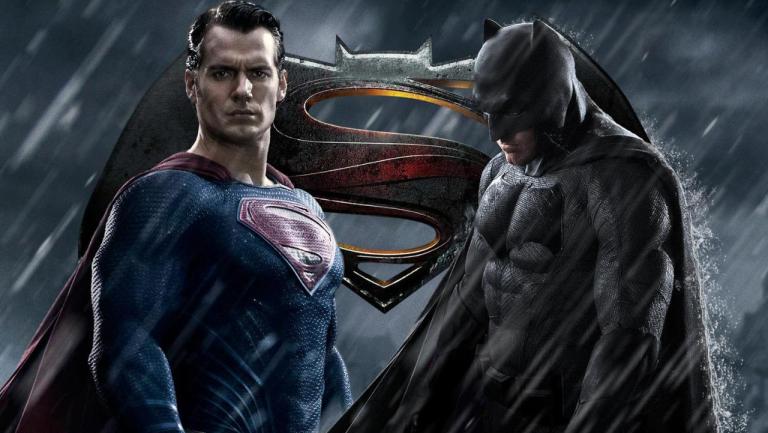
batmanvsuperman-xlarge
Artwork from Batman v Superman: Dawn of Justice, courtesy Warner Brothers
Batman v. Superman: Dawn of Justice will be rolling out to theaters later this month. But before the movie even lands in the local cineplex, there’s already buzz about what’ll be on the home video release: A big letter R.
According to ew.com, the “Ultimate Edition” of the movie will bear an R rating when it rolls out on DVD and Blu-Ray. Wolverine 3, due about this time next year, will also be shooting for an R. Many speculate that this could just be the beginning of a new wave of R-rated superhero stories. So prevalent is this sudden push for restricted ratings that Ant-Man director Peyton Reed suggested cheekily that this could be only the beginning. “Breaking: ANT-MAN AND THE WASP is going FULL NC-17,” he tweeted.
Some superhero fans, primed by the runaway success of the R-rated Deadpool, are excited to see superheroes go in a harsher, grittier, bloodier direction.
Don’t count me among them.
Don’t misunderstand me. I’m all for a bit of grit in my superhero stories. I wrote a book on the spirituality of Batman, based largely on Christopher Nolan’s darkly terrific Dark Knight trilogy. I’m eagerly awaiting the premiere of Daredevil’s second season on Netflix—a show that walks the line between PG-13 and R. Even Captain America—as straight-laced a superhero as there is—seems to have gotten deeper as his movies have gotten darker.
But when moviemakers push these superheroes into ever more depressing landscapes, I think we risk losing what made them so super to begin with.
Every culture has its myths and legends, be they religious or secular, featuring brave and powerful heroes and heroines who fight for what that culture holds dear. Often these stories had a hint of history in them, but whether they were historical or not was really, in a sense, beside the point. These stories linked generations together and helped give shape to society. And as such, they were often designed to teach younger listeners something about the world and how they should behave within it.
Granted, the characters in these stories were often far from perfect—indeed, they often behaved quite imperfectly—there’s still an aspirational flavor to them. The Greeks had their Iliad and Odyssey and their pantheon of heroes. The English had King Arthur and his knights. And for more than 80 years now, America has had its superheroes.
Like many of their mythic predecessors, our superheroes are often demigods, graced with powers and skills unattainable to folks like us. And they, like Achilles and Lancelot, have their share of flaws.
And from the moment of their inception, they were made for kids. Back in the 1930s and ‘40s, comics weren’t the province of fortysomething guys wanting to add to their collection. Children bought them, saving their nickels to take home Superman’s latest adventures, or reading about the Fantastic Four in the corner drugstore.
Sure, I understand that comics don’t fit that mold anymore. According to a survey by DC (the folks behind Superman and Batman), 64 percent of comic-book buyers are between the ages of 35 and 64. Deadpool, who first appeared in 1991, was never a kiddie comic-book character. And as I’ve mentioned, there’s an upside with even traditional superheroes growing grittier and more complex.
But you don’t adult content to tell a mature story. You can add grit without adding dirt, and excellence does not require f-words.
And while comic books might be the providence of adults these days, the superheroes themselves—the Supermans, Batmans, even, I’d wager, the Wolverines—are still very much embraced by children.
Take a spin through the big box store, and you’ll find legions of superheroes stocking the shelves where kids tend to gather. X-Men action figures. Iron Man birthday streamers. Captain America lunchboxes. LEGO became the biggest toy company in the world, in part, by peddling superhero sets to legions of children and tweens.
Even now, when we talk about the influence of superheroes on the culture, we understand the innate moral authority that these (admittedly flawed) characters bring to the table. They teach us lessons (“With great power comes great responsibility,” Spider-Man tells us). They serve as symbols (For years, superhero fans thought it was a crime that Wonder Woman had been so spurned by Hollywood: Girls, they said, needed to see a female superhero on screen.) At their best, they serve as role models. Even Batman, the poster boy for flawed superherodom, suggests that there’s light and hope that can be found even in a dark, dark world. That’s a message that all of us could stand to hear.
Heroes, even in today’s culture, mean something—especially to children. And it seems that, when we make their worlds too dark or make the heroes too adult, We lose their ability to reach the audience that arguably needs them the most. And we’re not doing just a disservice to kids. We’re doing a disservice to the superheroes themselves.

Wednesday, May 7, 2014

Jack Bauer has a Secret, and its Name is Batman

Fox's upcoming Gotham looks pretty interesting.

Fox released the first TV trailer for its gritty Batman prequel during Monday's premiere of 24: Live Another Day, where we saw Batman and multiple evildoers in their Muppet Baby phase. Penguin looks like a strangely skinny high schooler with a thing for umbrellas, the Riddler an up-and-coming accountant, Poison Ivy a cross between a second-grade botanist and the girl from The Ring. Bruce Wayne looks all of 10, and the future Commissioner Gordon is an idealistic rookie.

But it and the extended trailer (below) make the new fall series look like, for a Batman dweeb like me, must-see-TV.


And how appropriate that Fox would choose 24 to premiere the trailer. After all, Jack Bauer is Batman.

Well, not really. Jack eschews both capes and huge Swiss bank accounts. Batman never carries a gun and never kills, while Jack has killed around 270 people (and counting) and likely belongs to some sort of "gun of the month" club.

But they really are the same sort of hero now. Both are grim and tortured souls who work in the shadows. Both seek justice by skirting the law. Both have, at best, an uneasy relationship with the law agencies they're supposed to be working with. And at times, those relationships can become positively adversarial—even though everyone involved is fighting on the same side. Both, I suspect, have some serious issues that a good psychologist could help with—but neither have the time nor inclination. Both like their gadgets.

And both, of course, have become dark legends—their mere names striking fear in the hearts of men.

What draws us to heroes like this, I wonder? Never mind the success of Iron Man at the box office, Batman is America’s best known, most popular superhero, and has been for decades. And even though 24 never got incredibly huge ratings, Jack Bauer is perhaps the most recognizable character to come from television in the last couple of decades—capturing our imagination like few before. There’s gotta be something in their very darkness that pulls us to them, I think. They’re the toughest of the tough, but broken, too.

Perhaps they borrow from the world’s first heroic template. In Homer’s The Iliad, I’ve long felt that Hector—the doomed would-be savior of Troy—was the story’s real hero, not mighty Achaean Achilles. But perhaps both have passed on their literary genes to Jack and Batman: Hector, with his self-sacrificial willingness to give his call for his city and country. Achilles and his unmatched prowess in battle offset by his penchant to nurse deep wounds in the sanctity of his tent.

Or maybe they play on a deeper, even spiritual level, they remind us a little of us.

In God in the Streets of Gotham, I wrote this:

In most superhero stories, the line between good and evil, the gulf between light and darkness, is clearly defined. … But there’s a part of us, maybe a small, nagging, unpleasant part, that treats those stories with suspicion. We know the line is not that bright; the gulf between “us” and “them” is not that wide. We feel not just the hero inside us, but the villain . . . the darkness. Batman, a guy who doesn’t just wear a black hat, but one with pointed, horn-like ears, is a representation of our own selves, a strange, graphic allegory of the soul, with Gotham City a microcosm of the fragile, fallen world through which we struggle to make our way. Gotham itself feels bad—Old Testament bad. We can catch a glimpse of ancient Sodom or Samaria when we see its streets, and we feel its sin press on us with an almost physical presence. Batman, as we’re told in The Dark Knight, isn’t a perfect savior for the city; he’s the one it “deserves,” in all his imperfection. He walks perilously close to the line.
 And yet there’s something inside the guy that sets him apart. He may look bad, but it’s not what he looks like that matters. It’s what he does, and what he stands for, that counts.
How curiously biblical Batman is in this way. He’s not much like Superman, but he is something like Moses, David, and Peter. The Bible doesn’t sugarcoat our heroes for us or tell us they’re anything but pretty sorry, flawed folks. And yet God takes them and makes them special, even great, just as he does with us.

Maybe the same could be said for Jack Bauer, too—a guy who’s tougher and badder than we’ll ever be. And yet we see in him the darkness, and light, in us. Someone who has hurt people and who’s been hurt. Someone who makes a ton of mistakes every day. And yet someone who’s still striving to do right in spite of it all.


Sunday, December 2, 2012

A Deal Even Bruce Wayne Couldn’t Pass Up


What would be the perfect Christmas gift?

Naturally, it’d be indescribably cool—both entertaining and inspirational. It would be something you wouldn’t have to wrap. Oh, and ideally, it’d be free.

But where could you find a gift like this? Shangri la? Never Neverland? The North Pole?

Well, OK, so probably all those places have really great gifts, too. But they’re pretty hard to get to on a budget and their Internet connectivity is spotty. And let’s face it: When it comes to the North Pole, those elves can be a cantankerous bunch.

But thankfully, there is a gift that you can get right from the comfort of your own computer (or tablet or smartphone or other super-techy device). And unless my eyes are deceiving me, you’re at one of those devices right now. Which means you’re just a click or two away from a gift that will make you a legend among your family and friends, a gift that, if your place in heaven was based on works, would surely get you a place in a trendy heavenly neighborhood.

What gift could do all this? An e-copy of my book, of course. Tyndale is offering God on the Streets of Gotham: What the Big Screen Batman Can Teach Us About God and Ourselves absolutely free starting right now and lasting through Dec. 8. Naturally, you gotta have some sort of e-reader like a Kindle to actually read the book. But trust me: Spending a few hundred dollars on a tabletish-like device is a bargain for the wit and wisdom found in this book (if I do say so myself). It looks like it’s available through Amazon and the Apple bookstore and who-knows-where-else.

Of course, if you wanted to have a real, paper-and-ink copy of the thing, I’m sure Tyndale has a few of those available, too. But you’ll have to pay for those.

At any rate, I’d love it if you passed this bit of information onto anyone you think might be interested … or, as I say, give it as a gift. I’d like to think that it’d be a nice little addendum to a Dark Knight Rises Blu-Ray.

Alas, I cannot sign e-books. But, should you download one and wish to drop me a line, I’ll send back a picture of my signature that you can print out and paste on whatever nifty device you happen to use.

Best wishes, folks, and happy reading.